
Why a Trading Strategy Is Better Understood as a Narrative
How Price, Time, and Market Structure Form a Tradable Story.

In financial markets, the term trading strategy is commonly used to describe a fixed set of rules for entering and exiting trades. While this definition is widely accepted, it can be limiting. I believe a trading approach is better described as a narrative rather than a strategy, because successful trading is rooted in interpreting the evolving story that price action reveals over time.
Markets are not static systems. They are driven by participants with different objectives, time horizons, and levels of information. As a result, price does not move randomly; it unfolds in a sequence of events that reflect accumulation, manipulation, and distribution. Charts, therefore, are not merely technical tools but storytelling devices. Each candle, session, and range adds context to what price is attempting to do. A trader’s role is to follow this story, understand its structure, and identify the part of the narrative that offers opportunity.
Referring to trading as a narrative emphasizes interpretation over rigid execution. Instead of mechanically applying indicators, the trader observes how price reacts at key levels, how it behaves during specific market sessions, and how it respects or violates time-based expectations. From this perspective, a trader does not “force” trades; rather, they participate when the narrative aligns with their understanding and risk parameters.
Consistency is a crucial element of a functional trading narrative. Price movements tend to respect certain time windows, particularly in major commodities and indices. Market sessions—such as Asian, London, and New York—often carry distinct characteristics and intentions. When a trader aligns their narrative with these time-based behaviors, their decisions become more structured and repeatable.
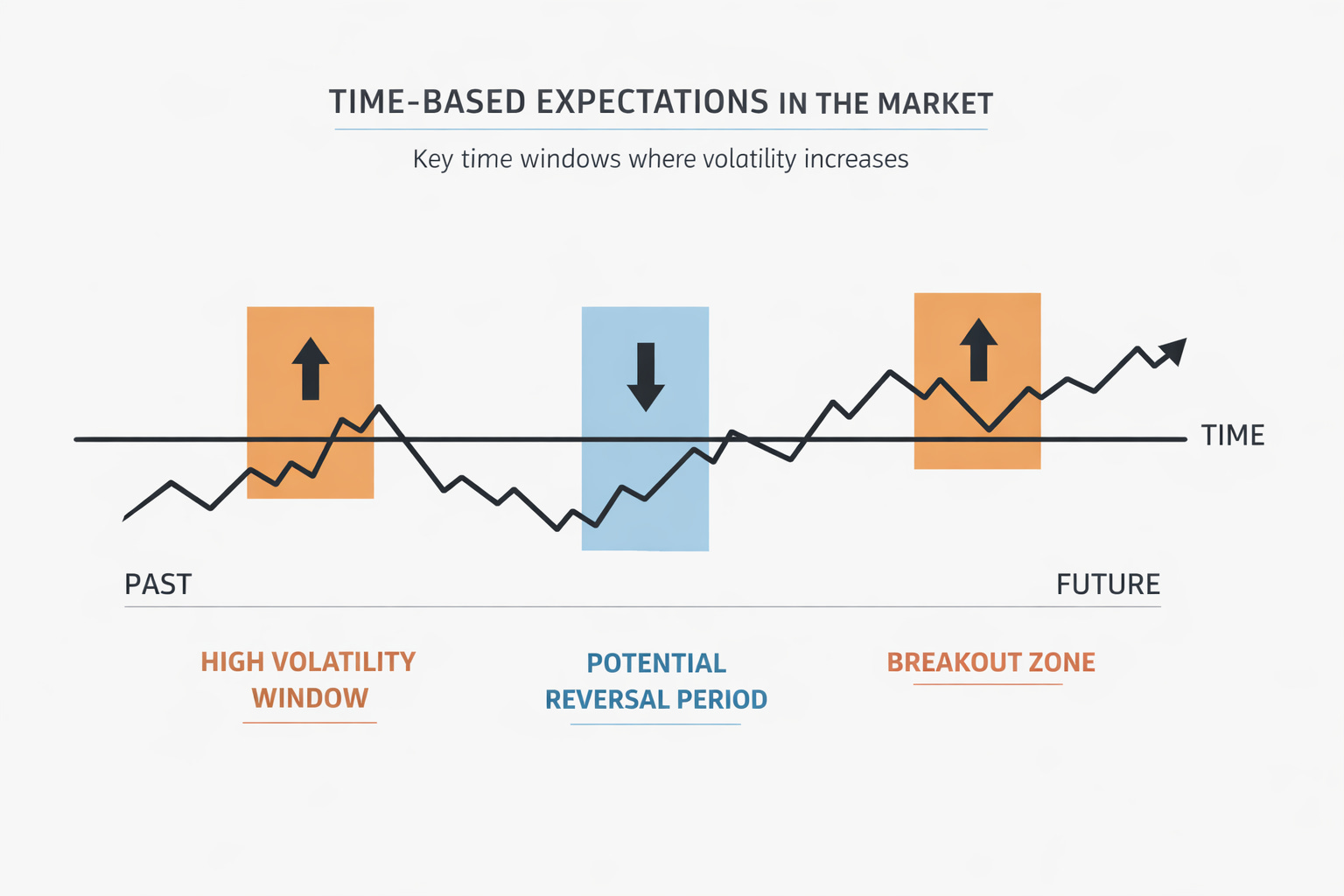
A clear example of this concept can be found in ICT’s time and price model. This framework highlights that time plays a significant role in determining when meaningful price movements are likely to occur. Price reaching a key level is not always enough; when it reaches that level can be just as important. This reinforces the idea that markets unfold as a story governed by both price and time, not isolated technical signals.
In conclusion, viewing trading as a narrative fosters deeper market understanding, patience, and adaptability. It shifts the trader’s mindset from rule-following to context-reading, allowing them to engage with the market as a living, unfolding story—one where disciplined interpretation can be turned into consistent advantage.